





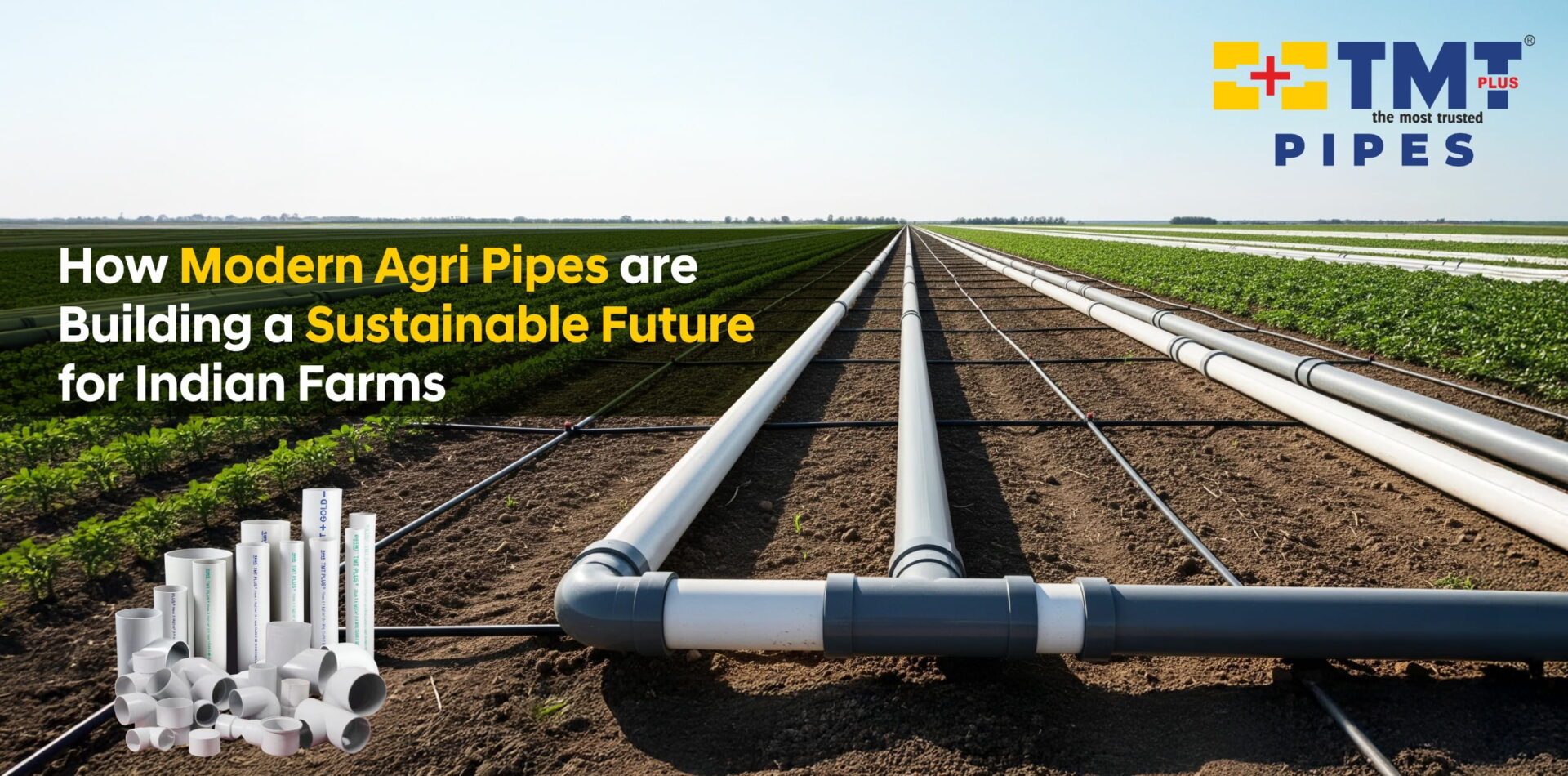
With rising instances of water scarcity, unpredictable monsoons, and growing needs for reforms in agricultural production, Indian farmers find themselves standing at an important crossroads. Irrigation has gone from being simply about availability to also about efficiency, with farmers also paying attention to water conservation. As a result, farmers all across the nation are rethinking how they transport water in their fields. This is where modern agri pipes quietly play a transformational role in India's primary sector.
At TMT Plus, we believe that smarter water management is the foundation of sustainable farming. Pipes may seem like a small component in the vast agricultural ecosystem, but their impact on productivity and operational reliability is significant. As farms modernise, the infrastructure supporting them must evolve as well.
How Does Efficient Water Flow Impact Agriculture
Water-smart farming begins below the surface. A dependable piping system ensures that every drop of water reaches the right crop at the right time. Traditional solutions no longer work as efficiently as they used to, often failing under pressure due to factors including but not limited to climate change, temperature changes, and prolonged exposure to soil chemicals. This can result in a lot of leakage, wastage, water loss and frequent maintenance interruptions.
With this in mind, TMT Plus manufactures agricultural piping solutions that address these challenges head-on. Effective water flow ensures regular irrigation, prevents the unnecessary consumption of energy, and reduces crop stress. Thanks to the structural integrity of pipes, the water pressure remains even throughout, allowing farmers to have a fail-proof solution to irrigate their fields. Some of the most important advantages of effective irrigation pipes include:
- Reduced water loss due to leaks
- Uniform distribution across fields
- Lower pumping and maintenance costs
- Improved crop health and yield stability
Why Material Quality Matters More Than Ever
Contemporary agriculture requires the use of materials that can sustain the rigours of the changing weather. Soil conditions differ greatly across the geographical location within India, and the use of agricultural chemicals like pesticides further tests the limits of conventional piping. Choosing the right material directly impacts system lifespan and safety.
TMT Plus uses world-class uPVC material engineered specifically for agricultural environments. These pipes are corrosion-free and remain unaffected by soil composition, fertilisers, and chemical exposure. Heat, monsoon moisture, and winter temperatures do not compromise their structure or performance. This helps in minimising friction loss, thus allowing the water to flow properly. For farmers, this translates to fewer occurrences of blockages, consistent pressure, and reliable operation year after year.
How Pipes Adapt Across Applications
Today, the agri-infrastructure needs to fulfil the growing demands of the modern world. Irrigation is only a small component of the whole, but an important one nonetheless. Bore-wells, tube well casing, effluent discharge, and water supply are all needed with effective, versatile pipes. TMT Plus offers underground and over-ground irrigation systems that remain dependable, season after season. As a result, farmers have the freedom to design layouts depending on their own needs. From small farm plots to large-scale irrigation networks, adaptability reduces the need for multiple pipe types. Common application areas include:
- Crop irrigation across farm fields
- Bore-wells for groundwater extraction
- State water supply departments
- Autonomous water bodies and institutions
- Industrial chemical water supply systems
How Modern Pipes Simplify Installation and Long-Term Maintenance
Ease of installation often determines how quickly a farming project becomes operational. Complex systems increase labour costs and delay productivity. Modern agricultural piping is designed to simplify both installation and repairs. TMT Plus systems are lightweight yet strong, allowing quicker handling and alignment during installation. In the rare case of damage, replacement or repair is straightforward and fast, minimising downtime during critical irrigation periods. This focus on practicality supports farmers who cannot afford prolonged interruptions. A system that installs easily and maintains effortlessly adds measurable value over its lifespan.
Can Agri Pipes Survive India's Climate Extremes?
India’s climate poses a distinctive set of challenges. Pipes are required to withstand extreme summer temperatures, prolonged monsoon rainfall, and comparatively cooler winter conditions without bending, cracking, or losing strength. Many conventional piping materials tend to deteriorate when exposed to such repeated environmental stress.
TMT Plus uPVCagri pipes are engineered with UV resistance and are specifically designed to perform reliably across seasonal variations. Their structural strength remains stable even after long-term exposure to sunlight and ongoing temperature changes. As a result, they deliver dependable performance across different regions and climate zones. By minimising failures caused by weather conditions, these pipes provide farmers with greater confidence, consistent irrigation flow, and more predictable agricultural outcomes.
How to Ensure Safe and Efficient Operation
Technology performs best when used correctly. Proper installation and operation practices extend the life of agricultural piping systems and ensure safety.
Do’s
- Irrigation networks for small and large farms
- Select the correct pipe diameter based on irrigation requirements.
- Use compatible fittings designed for PVC systems.
- Inspect pipes and fittings for debris or defects before installation.
- Maintain recommended water pressure levels.
- Conduct regular inspections during irrigation seasons.
Don’ts
- Irrigation networks for small and large farms
- Avoid exceeding the power capacity of control boxes.
- Never leave wires exposed outside boxes.
- Do not ignore loose connections that may cause overheating.
- Avoid repairs without proper experience.
- Do not install systems in damp environments unless waterproofed.
Following these guidelines protects both infrastructure and operators.
How Correct Specifications Prevent System Failure
Choosing the correct pipe size and pressure class plays a critical role in maintaining overall system efficiency. Clear technical specifications make it easier to align pipe performance with actual operating requirements, reducing the risk of mismatch or failure.
TMT Plus provides a comprehensive selection of nominal sizes ranging from 20 mm to 225 mm, along with multiple pressure classes from Class 1 through Class 5. This broad offering supports everything from low pressure irrigation networks to more demanding water supply applications, allowing systems to be designed with precision rather than compromise.
Proper selection helps prevent excessive load on the system and lowers energy consumption, all the while contributing to a longer service life. When technical details are clearly defined and well understood, farmers and institutions are better equipped to make informed decisions that balance performance, reliability, and cost effectiveness.
How Modern Pipes Enable Water-Smart Farming
As agriculture moves toward sustainability, infrastructure must support conservation without compromising output. Efficient piping reduces water loss, supports precision irrigation, and aligns with modern farming practices such as drip and controlled irrigation.
TMT Plus views piping not just as a product, but as part of a broader agricultural ecosystem. When water flows efficiently, crops thrive, energy use declines, and farming becomes more resilient against environmental uncertainties. This approach supports both small farmers and large institutions seeking long-term water security.
Choosing the Right Partners for the Future
The future of Indian agriculture depends on reliable systems that balance productivity with sustainability. Selecting dependable partners and proven solutions is essential. Working with experienced agri pipes manufacturers ensures access to quality materials, tested designs, and long-term support.
Farmers, institutions, and water authorities should evaluate products based on durability, adaptability, and total lifecycle value rather than upfront cost alone. Investing wisely today builds resilient farms for tomorrow.
FAQs
1. Why are modern agricultural pipes important for water conservation?
They minimise leakage, maintain consistent pressure, and ensure precise water delivery, reducing overall wastage.
2. Can these pipes be used for both irrigation and drinking water supply?
Yes, they are suitable for potable water and agricultural irrigation when installed correctly.
3. How long do modern uPVC agricultural pipes typically last?
With proper installation and maintenance, they can last several decades under normal conditions.
4. Are these pipes suitable for extreme weather conditions?
They are designed to withstand heat, monsoon moisture, and seasonal temperature changes without degradation.
5. What should farmers consider before selecting pipe sizes?
Water pressure requirements, field layout, pump capacity, and future expansion plans should all be evaluated.