
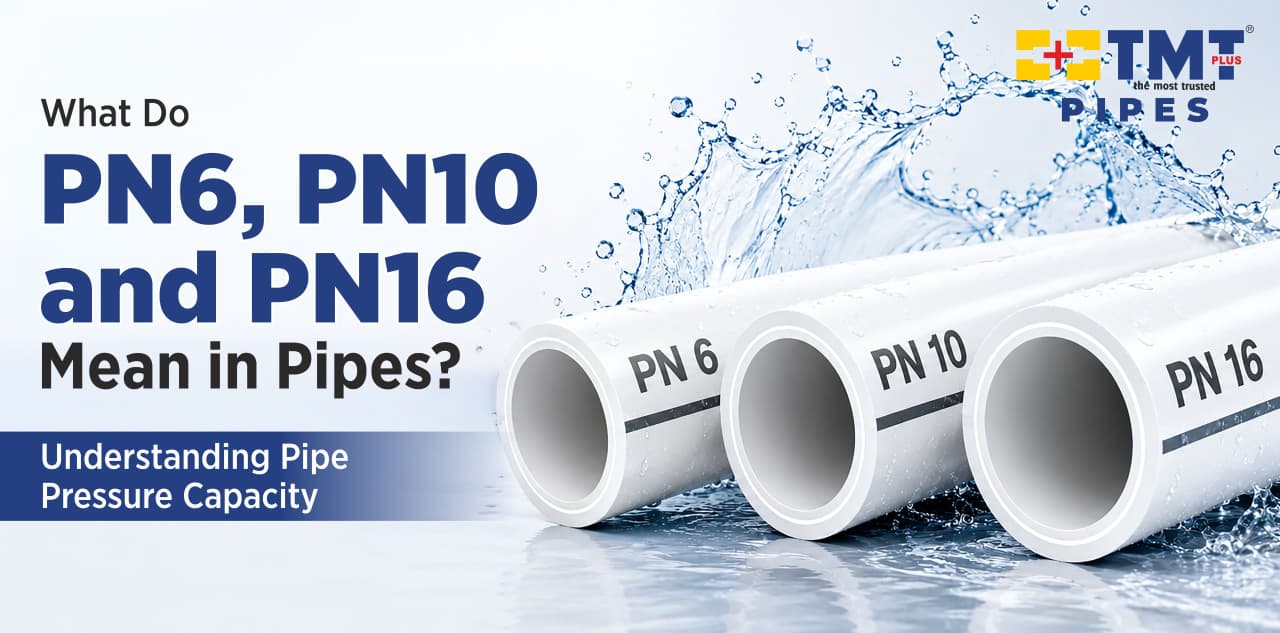
When specifying or installing pipes, assuming “a pipe is just a pipe” is an expensive mistake. The pressure demands of a single-story home, a multi-story apartment block, and an agricultural irrigation line are drastically different, and so are the materials required to handle them. That is where PN ratings come in. Understanding what PN 6, PN 10, and PN 16 actually mean is the fastest way to ensure system integrity, prevent catastrophic pressure failures, and avoid overspending on unnecessary specs.
What Does PN Actually Stand For?
PN stands for ‘Pression Nominale’, a French term that translates to nominal pressure. It is a rating system used across plastic and metal piping to indicate the maximum pressure a pipe or fitting can safely withstand under standard conditions, typically measured at 20 degrees Celsius.
The number that follows PN represents the maximum pressure in bar. One bar is defined as exactly 100,000 Pascals (100 kPa), or around 14.5 PSI (Pounds per Square Inch). So a pipe marked PN 10 is rated to handle 10 bar of pressure (around 145 PSI), and a pipe marked PN 16 is rated for 16 bar (around 232 PSI). It sounds simple, but the practical implications of choosing the wrong rating are anything but small.
This system is not something individual manufacturers invented independently. It follows internationally recognised ISO PN standards, since ISO sets the global benchmark for how piping components, fittings, and pressure containment are measured and classified. That consistency is what allows a pipe made in one country to be fitted confidently alongside components from another, provided both follow the same rating system.
Why Pipe Pressure Capacity Is Not Just a Technical Footnote
Pipe pressure capacity determines whether a system holds up under daily use or fails under strain that was entirely foreseeable. A pipe operating below its rated pressure generally performs well for years. But if you push it consistently above that rating, even by a modest margin, the risk of long-term stress fractures, joint failures, or sudden bursts increases considerably. This matters more in some settings than others:
- • Multi-storey buildings, where water pressure increases significantly at lower floors.
- • Irrigation networks, where pump pressure can spike during peak flow.
- • Commercial and industrial systems, where pressure fluctuations are frequent and often unpredictable.
Selecting a pipe with adequate headroom above expected operating pressure is not overengineering. It is a basic safety margin that costs very little upfront and prevents a great deal of cost later.
PN 6 Pipes
PN 6 pipes sit at the lower end of the pressure rating scale, built to handle up to 6 bar of pressure. That makes them suitable for applications where pressure is genuinely low and consistent, rather than variable or high.
Typical uses include low-pressure irrigation lines, certain drainage applications, and gravity-fed water systems like garden hoses, where pressure never climbs particularly high in the first place. PN 6 pipes are not the right choice for pressurised household plumbing or any system where pressure surges are a realistic possibility.
Where they are well suited, however, PN 6 pipes offer a sensible balance of cost and performance. There is little point paying for a higher pressure rating on a line that will never come close to testing it. Matching pipe grade to actual demand is really the whole point of the PN system in the first place.
PN 10 Pipes
PN 10 pipes are rated for up to 10 bar of pressure, and they are, in many respects, the workhorse of general water supply systems. Most residential and light commercial cold water plumbing sits comfortably within this range.
A few situations where PN 10 pipes are the standard choice:
- • Household cold water supply lines, where pressure rarely exceeds a few bar under normal conditions.
- • General purpose water distribution in low to mid-rise buildings.
- • Agricultural water supply lines with moderate pump pressure.
PN 10 gives enough headroom for typical pressure fluctuations without paying for capacity that will sit unused. It is worth noting that pipe damage is not always caused by pressure alone. Environmental stress, poor installation, and material fatigue also play a role, something covered in more detail in our post on why PVC pipes crack or leak and how to prevent it.
PN 16 Pipes
PN 16 pipes step up to handle pressure of up to 16 bar, making them the choice for situations where PN 10 simply is not enough headroom. This includes taller buildings, where water pressure at ground floor level is considerably higher than at the top, and industrial or commercial systems that experience regular pressure spikes. Some common applications for PN 16 pipes:
- • Multi-storey residential or commercial buildings with higher static pressure at lower levels.
- • Industrial process lines carrying pressurised fluids.
- • Hot and cold water systems in larger commercial developments.
PN 16 pipes cost more than PN 10, and that additional cost is only justified where the system genuinely needs it. Fitting PN 16 pipe throughout a small residential property with modest water pressure is not a safety upgrade. It is an unnecessary expense. The rating should always be matched to the actual pressure profile of the system, not chosen simply because higher sounds safer.
How to Actually Choose the Right PN Rating
Selecting the correct pressure rating of pipes for any given project comes down to a handful of practical questions rather than guesswork.
- • What is the expected operating pressure of the system under normal conditions?
- • Are there likely to be pressure spikes, such as pump start-up or peak demand periods?
- • What is the ambient temperature the pipe will typically operate in, since higher temperatures reduce a pipe's effective pressure capacity?
- • Is the system likely to be expanded or modified later, potentially increasing demand on the same pipework?
Getting this assessment right at the design stage avoids a very specific kind of regret, the sort that shows up as a burst joint six months after installation. It is also worth checking that any fittings, valves, and joints used alongside the pipe carry a matching or higher PN rating, since a mismatched component becomes the weak point in an otherwise well-specified system. Material quality matters just as much as pressure rating here. For more details, you can read our blog post on quality standards worth checking when buying cPVC pipes.
Getting the PN Rating in Pipes Right From the Start
Ultimately, the PN rating in pipes exists to remove guesswork from a decision that used to rely heavily on experience and instinct. A pipe rated correctly for its application lasts longer, performs more predictably, and avoids the kind of failure that tends to happen at the worst possible time.
Before finalising any plumbing, irrigation, or industrial piping project, it is worth taking the time to calculate actual operating pressure rather than defaulting to whichever pipe happens to be on the shelf. A brief conversation with a knowledgeable supplier, one who can talk through pressure requirements alongside material grade and application, tends to be time well spent. TMT Plus manufactures across the PN rating range, which makes it easier to find a pipe suited to the pressure demands of a specific project rather than settling for a rating that only roughly fits.
Frequently Asked Questions
1. What does PN mean on a pipe?
PN stands for Pression Nominale, a French term meaning nominal pressure. The number following PN indicates the maximum pressure, in bar, that the pipe or fitting can safely withstand.
2. What is the difference between PN 10 and PN 16 pipes?
PN 10 pipes handle up to 10 bar of pressure, suited to standard residential plumbing. PN 16 pipes handle up to 16 bar, making them better suited to high-rise buildings and industrial systems.
3. Can I use PN 6 pipes for household water supply?
Generally not recommended. PN 6 pipes suit low-pressure applications, such as gravity-fed irrigation and garden hoses, but household plumbing typically requires at least PN 10 to handle standard supply pressure safely.
4. Does temperature affect a pipe's pressure rating?
Yes, PN ratings are based on 20 degrees Celsius. Higher operating temperatures reduce a pipe's effective pressure capacity, so systems handling hot water often need a higher PN rating than cold water lines.
5. Does TMT Plus manufacture pipes across different PN ratings?
Yes, TMT Plus manufactures pipes across the PN rating range, helping buyers select pressure capacity suited specifically to their residential, commercial, industrial, or agricultural application.