
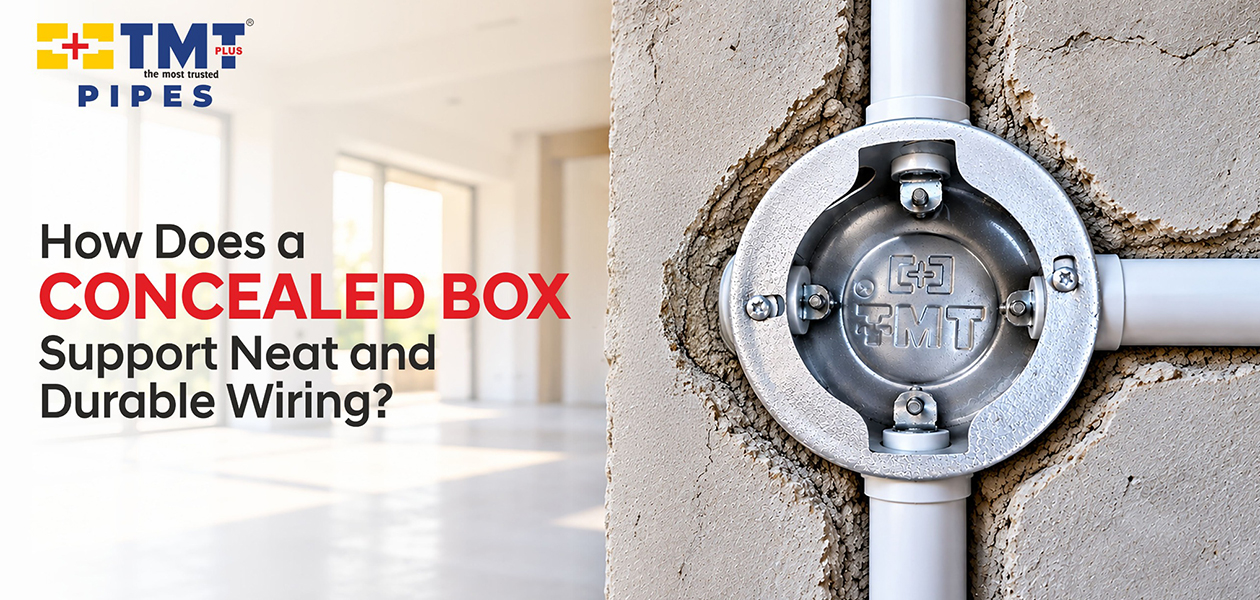
How Does a Concealed Box Support Neat and Durable Wiring?
Have you ever had a loose switch, struggled to reach wiring behind a wall, or had to reopen a finished surface because something was not fitted properly the first time? Dust, moisture, cramped wiring, and incorrect placement can all create trouble later. A concealed box gives switches, sockets, and electrical connections a proper place inside the wall while keeping the finished installation neat.
TMT Plus offers concealed electrical enclosures for homes, commercial spaces, and industrial projects. They are made with practical installation, protection, and durability in mind. Choosing the right box may seem like a small part of electrical planning, but it can make wiring easier to manage during installation and much less troublesome when maintenance is needed later. This blog looks at how concealed boxes can support neat wiring, easier installation, and long-term protection.
1. Neat Wiring Begins Behind the Wall
What you see after installation is usually just the switch plate. Most of the actual work happens behind it. Cables need enough room to enter the box, connect properly, and stay in place without being cramped together. This becomes even more important when several switches or sockets share the same point.
TMT Plus concealed boxes provide a dedicated space for switches, sockets, wiring connections, and other electrical components. Available in Titanium and Classic variants, they are suited to concealed installations where the inside needs to be as orderly as the finished surface.
- Keeps electrical connections together in one space.
- Makes switch and socket fittings neater.
- Keeps wiring more orderly inside the wall.
- Limits unnecessary exposure of internal connections.
- Works with PVC conduit pipes for electrical wiring.
2. Good Protection Matters After the Wall Is Finished
Once wiring disappears behind plaster, it is easy to forget about it. The problem is that dust, moisture, site debris, and accidental impact can still affect what is inside. And once the wall is painted and occupied, even a small electrical issue can become inconvenient to trace and repair.
TMT Plus concealed boxes give electrical connections a more secure enclosure inside the wall. Their construction is intended to deal with everyday conditions found across residential, commercial, and industrial sites.
- Keeps construction dust and debris away from connections.
- Limits direct exposure to moisture.
- Protects wiring from accidental physical impact.
- Keeps connections enclosed after plastering.
- Provides a more durable housing for regular use.
3. Correct Fitting Can Save Rework Later
An electrical point that sits slightly too deep, too high, or out of alignment may not look like a major problem during construction. It becomes much more noticeable when the switch plate goes on. By then, correcting it may mean disturbing plaster, paint, or other finished work.
TMT Plus concealed enclosures are made with practical fitting in mind. Selecting the right electrical box gives the electrician a proper space for routing cables, making connections, and positioning switches or sockets before the wall is finished.
- • Makes alignment with the wall surface easier.
- • Gives wiring a clearly defined space.
- • Helps electricians plan switch and socket placement.
- • Reduces avoidable fitting issues during finishing.
- • Makes repeated electrical points more consistent.
4. Moisture and Corrosion Can Cause Trouble Out of Sight
Electrical points near kitchens, utility areas, exterior walls, or spaces with higher humidity need a little more thought. Moisture does not always create an obvious problem straight away. Over time, however, damp conditions and corrosion can affect components hidden behind the wall.
TMT Plus concealed boxes are made to resist moisture and corrosion, giving concealed connections added protection in different site conditions. Of course, the box is only one part of the job. Correct conduit routing, suitable wiring, and proper fitting also matter.
- Reduces direct moisture exposure around connections
- Offers resistance against corrosion.
- Keeps dust away from internal electrical parts.
- Adds a physical barrier around concealed wiring.
- Keeps the installation area cleaner and better contained.
5. Organised Wiring Makes Future Maintenance Simpler
Electrical work does not end when a building is handed over. A socket may need replacing after a few years, a switch may be upgraded, or an electrician might have to inspect a connection. When everything behind the wall has been arranged properly, these jobs are much easier to deal with.
TMT Plus concealed boxes keep connections within a clearly defined enclosure. That gives electricians a more straightforward point to work from when servicing or replacing an electrical fitting./p>
- • Keeps related connections together.
- • Makes electrical points easier to locate and understand.
- • Allows switches and sockets to be replaced more conveniently.
- • Gives electricians clearer access to the wiring.
- • Can reduce unnecessary disturbance during small repairs.
6. The Same Box Will Not Suit Every Project
A bedroom switch point and an electrical point in a factory do not have identical requirements. Wall depth, the number of switches, cable volume, conduit direction, and site conditions can all change from one project to another. Choosing a box without considering these details can make fitting unnecessarily difficult.
TMT Plus provides concealed boxes for residential, commercial, and industrial applications. The range can also be used across lighting, HVAC, telecommunications, and security installations where electrical connections need proper housing.
- • Check how many switches or sockets are planned.
- • Measure the available depth inside the wall.
- • See where the conduit needs to enter.
- • Allow enough room for the required wiring.
- • Consider moisture, dust, and other site conditions.
- • Leave practical access for future maintenance.
7. Make the Decision Before Plastering
The best time to correct an electrical point is before the wall is finished. Once plaster, paint, tiles, or other finishes are in place, changing the depth or position of a box becomes much more troublesome. A little coordination between the electrician and the site team at the beginning can prevent unnecessary work later.
TMT Plus concealed boxes are suited to planned installations across new construction projects. Choosing the size and position according to the wiring layout gives installers a better chance of getting the point right the first time.
- • Match the box size with the planned accessories.
- • Check wall depth before installation.
- • Fix the box level before plastering starts.
- • Leave enough room so cables are not overcrowded.
- • Keep the point workable for future servicing.
8. Think About the Wiring System as a Whole
A concealed box cannot make up for poor wiring, unsuitable conduit, badly planned bends, or incorrect installation. Every part of the electrical network has a job to do. The best results come when these components are selected and planned together rather than treated as separate purchases.
TMT Plus offers conduit pipes, bends, fittings, concealed boxes, fan boxes, modular boxes, and other electrical accessories. Bringing the right components together can make the wiring layout easier to install, manage, and maintain.
- • Plan conduit routes before finishing the walls.
- • Do not overcrowd electrical connection points.
- • Match box size with the wiring and accessories.
- • Keep wire joints properly enclosed.
- • Use the right fittings when conduit changes direction.
- • Have electrical work carried out by trained electricians.
Conclusion
Good concealed wiring is mostly about getting the basics right before the wall is closed. The box needs to be the right size, fitted in the right place, and used with suitable conduit and wiring. When those details are handled properly, connections stay more organised, remain better protected from dust and moisture, and are easier to reach if something needs attention later.
A junction box, concealed enclosure, conduit, and fitting are all parts of the same electrical network, so they should be planned together. Review the layout with a qualified electrician before plastering begins and confirm the right sizes, routes, and installation conditions. Explore TMT Plus concealed boxes and electrical accessories today, or contact the TMT Plus team to find the right solution for your project.
Frequently Asked Questions
1.What is the need for a concealed box at home?
To enclose the wiring behind switches and sockets inside the wall and to provide an appropriate base for the switch plates.
2. Which concealed box size should I choose?
It depends upon the number of switches or sockets to be mounted at the point. An electrician can decide it by checking the required cavity depth and wiring needs.
3. Is a concealed box different from a junction box?
Yes, a concealed box is mostly used for mounting switches or sockets. Junction boxes are used to connect and join electrical circuits.
4. Can TMT Plus concealed boxes be used for home purposes?
Yes. They can be used for normal domestic electrical points like switches, sockets, and lighting connections.
5. Why are TMT Plus Concealed Boxes good for home wiring?
They are designed to be installed securely in the wall and help maintain a neat and covered electrical connection. TMT Plus also has options for your normal home wiring needs.