
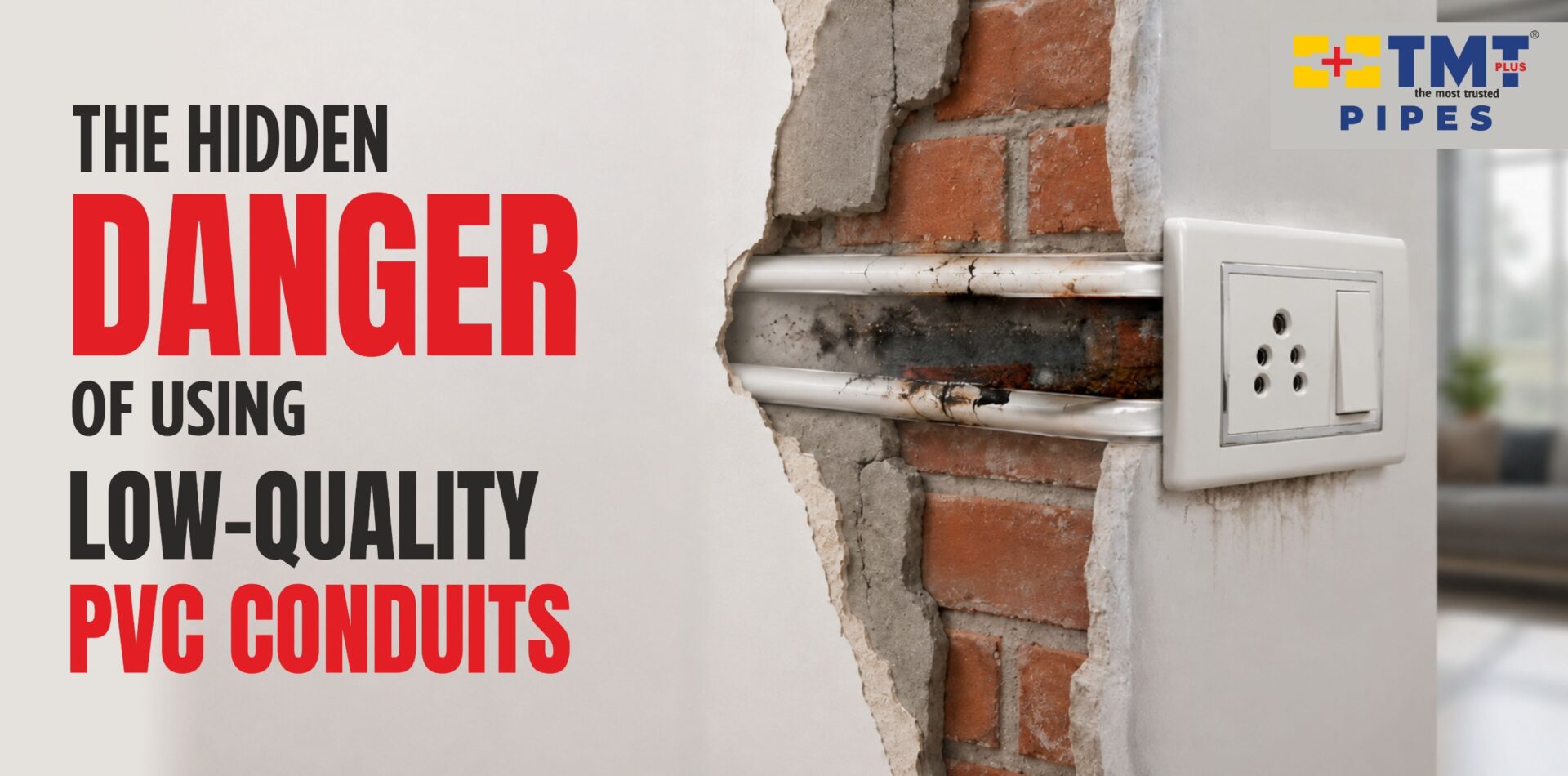
Poor-quality conduit systems often require earlier maintenance, repairs, or replacement, increasing the overall lifecycle cost of an electrical installation.
Most electrical failures do not begin with the wires. They often begin much earlier, when material decisions are made during construction.
Once a conduit system is installed, it is largely forgotten. Hidden behind walls, above ceilings, and beneath concrete, these conduit pipes quietly protect your electrical wiring. But when the very thing meant to protect your wiring weakens due to poor material quality, the consequences can range from costly maintenance and cable damage to serious safety concerns.
Why Quality Should Never Be an Afterthought
An electrical system's durability depends heavily on the quality of its conduit infrastructure.
Unfortunately, many project owners, contractors, and facility managers discover this only after installation.
By that stage, replacing an entire conduit network can be costly and disruptive.
High-grade PVC resin, carefully engineered additives and rigorous manufacturing controls directly influence service life, structural strength and long-term safety.
In an industry where electrical systems are expected to perform reliably for decades, understanding the role of raw materials is one of the most important decisions affecting the lifespan and performance of an entire building.
What Makes a PVC Conduit Pipe Durable?
A durable PVC conduit pipe is manufactured using high-grade virgin PVC resin, quality stabilisers, and advanced additives that improve impact resistance, flame retardancy, UV stability, and long-term structural performance.
Whether used in residential homes, commercial buildings, or industrial facilities, the quality of raw materials directly influences the lifespan and safety of the entire electrical conduit system.
The Foundation of Long-Term Performance
In modern construction, PVC conduit pipes serve as the backbone of concealed wiring systems. Whether used as an electrical conduit pipe in residential projects or as a conduit electrical wiring solution in commercial facilities, material quality plays a critical role in long-term performance.
Every conduit pipe is only as strong as the materials used to create it. High-quality PVC resin provides the structural backbone needed to maintain shape, resist impact and protect electrical wiring under demanding conditions.
When inferior raw materials are used, pipes may become brittle, crack under pressure or lose dimensional stability when exposed to changing environmental conditions. Trusted manufacturers use raw materials that meet stringent manufacturing requirements. Their benefits include:
- • Greater resistance to impact during handling and installation
- • Improved structural integrity under load
- • Better dimensional consistency across production batches
- • Enhanced durability in challenging environmental conditions
These advantages contribute directly to safer and more dependable electrical installations.
Why PVC Resin Quality Matters
PVC resin serves as the primary ingredient in conduit manufacturing, meaning its initial quality directly impacts the overall performance of the final product.
- • Enhanced Structural Integrity: High-quality resin creates a stronger material, making the conduit more resistant to cracks, bending, and early wear.
- • Robust Environmental Protection: The resin’s quality determines how well the conduit protects wires from rubbing, bumps, and harsh weather over time.
- • Industrial-Grade Reliability: High-quality PVC resin means dependable, long-lasting performance in homes, offices, and factories.
- • Certified and Standardised Consistency: Using top raw materials, following IS 9537 standards, and strict testing ensures every conduit works the same way.
- • Efficient Cable Installation: Better materials make the inside surface of the conduit smooth, so cables slide through quickly and easily.
Ultimately, investing in conduits made from premium-grade resin ensures that electrical infrastructure remains secure, efficient, and built to last.
The Role of Additives in Electrical Safety
Beyond the base resin, specialised additives significantly influence conduit performance. These carefully selected compounds improve properties such as flame resistance, UV stability and impact strength.
Additional performance benefits may include:
- • Enhanced UV resistance for outdoor applications
- • Improved resistance to chemical exposure
- • Better thermal stability in varying temperatures
- • Longer service life with reduced degradation
As safety requirements continue to evolve, manufacturers increasingly rely on advanced formulations to enhance product reliability. A high-quality electrical conduit pipe should not only protect wiring but also contribute to overall building safety.
Low-Grade vs. High-Grade PVC
When comparing low-grade PVC pipes to high-grade ones, the differences extend far beyond the initial price tag. High-grade PVC features a tighter molecular structure and controlled wall thickness, whereas low-grade options often rely heavily on chalky fillers to cut costs, making them brittle.
| Property | Low-Grade PVC Pipes | High-Grade PVC Pipes |
|---|---|---|
| Raw Material Quality | Made with recycled plastic scrap, high levels of cheap mineral fillers, or low-quality resins. | Made from premium, high-grade virgin PVC resin with optimised stabilisers. |
| Wall Thickness | Uneven or inconsistent wall thickness; prone to thin "weak spots". | Uniform, precise wall thickness adhering strictly to standards (like Schedule 40/80 or IS standards). |
| Impact Resistance | Brittle; shatters, cracks, or deforms easily when exposed to construction site traffic or dropped tools. | High impact resistance; has structural resilience to absorb shocks and bounce back without breaking. |
| Pressure Capacity | Low pressure threshold; highly susceptible to bursting or leaking under pressure spikes. | Rated for designated high-pressure tasks. |
| Lifespan & Aging | Short lifespan; subject to rapid degradation, premature ageing, and environmental cracking. | Exceptionally durable; designed to last 50 to 100 years under correct operating conditions. |
| Internal Surface Finish | Rough, uneven, or rippled interior walls. | Polished, friction-free interior walls that allow easy cable pulling or optimal fluid flow. |
| UV & Weather Resistance | Lacks UV stabilisers; discolours, becomes chalky, and turns highly brittle when exposed to sunlight. | Enriched with UV inhibitors, retains strength and colour during prolonged outdoor or rooftop exposure. |
| Chemical & Fire Safety | Poor chemical resistance; may easily catch fire and emit toxic, dense black smoke. | High chemical resistance to acids/alkalis; self-extinguishing and flame-retardant properties. |
| Certifications | Lacks standard quality markings or carries fake/unverified stamps. | Carries authentic certifications and regulatory benchmarks. |
How to Spot the Difference
- • The Weight Test: Low-grade pipes often feel unusually light (due to thin walls) or excessively heavy and chalky due to cheap stone powder fillers.
- • The Bend/Flex Test: If you apply pressure to a high-grade conduit, it will flex slightly before yielding. A low-grade pipe will give a sharp "snap" and break with minimal bending.
- • The Visual Check: High-grade pipes have smooth, glossy finishes with clean, evenly printed specifications, brand logos, and batch numbers. Low-grade pipes frequently display blurry print, rough edges, and inconsistent colouring.
Expert Tip
Never choose conduit pipes based solely on price. Once electrical pipes are installed behind walls or under concrete, replacement becomes expensive and disruptive. Investing in high-quality PVC conduit systems at the construction stage can help avoid future maintenance costs while improving overall electrical safety.
Manufacturing Consistency Starts with Material Consistency
Even the most advanced production equipment cannot compensate for poor raw materials. Consistency in manufacturing depends on consistency in inputs.
When raw materials meet strict quality standards, the resulting conduit pipes are more likely to maintain accurate dimensions, uniform wall thickness and dependable mechanical properties. This precision supports easier installation and predictable field performance.
Consistency also affects compatibility with bends, fittings and accessories. Proper dimensional accuracy helps ensure secure connections throughout the conduit system, reducing the likelihood of installation issues and maintaining overall system integrity.
For contractors and project managers, this reliability translates into smoother project execution and greater confidence in long-term performance.
Performance Across Diverse Applications
Electrical infrastructure faces distinct physical and environmental challenges depending entirely on where it is installed. High-quality raw materials ensure that conduit systems adapt flawlessly to these varied conditions, remaining dependable even in the most demanding settings.
- • Residential Developments: Provides reliable, long-term protection for concealed wiring behind walls and within concrete slabs, ensuring maximum safety for homes.
- • Commercial Buildings: Accommodates complex, high-density cable networks safely, offering the flexibility and durability required for fast-paced commercial construction.
- • Industrial Facilities: Delivers superior mechanical and impact strength to withstand heavy machinery vibration, structural stress, and rigorous daily operational demands.
- • Infrastructure & Outdoor Projects: Features advanced resistance to moisture, corrosion, and harsh weathering, making it ideal for critical underground and open-air installations.
By tailoring premium material engineering to the specific demands of each sector, TMT Plus delivers versatile conduit solutions across India that guarantee your wiring remains secure, regardless of the environment.
The Connection Between Material Quality and Service Life
A conduit system is a long-term investment. Once installed, they are expected to perform reliably for many years with minimal maintenance. Though their service life is influenced by numerous factors, raw material quality remains one of the most significant.
TMT Plus conduit solutions are designed to deliver reliable performance for decades under standard operating conditions. This durability is supported by quality-controlled materials, certified manufacturing processes and comprehensive testing procedures.
Choosing products manufactured from superior raw materials can help reduce future maintenance requirements while supporting the safety and efficiency of electrical installations over time.
Building Better Electrical Systems Through Better Materials
The performance of a conduit system is determined long before the first cable is installed. High-quality raw materials create the foundation for durability, safety and long-term reliability.
When evaluating conduit solutions for any project, it is worth considering not only the specifications on paper but also the quality standards behind the manufacturing process. A well-engineered PVC conduit pipe made from carefully selected raw materials can provide dependable protection for years to come, helping ensure safer and more reliable electrical installations across residential, commercial and industrial applications.
Before making a selection, compare certifications, testing standards and material quality credentials to ensure the chosen conduit system aligns with the long-term needs of your project.
Expert Insight
Choosing cheap PVC pipes to save a little money early on is a major trap. Cheap pipes made with chalk filler crack easily under heavy concrete. Even worse, they can catch fire and create toxic smoke during an electrical short.
True electrical safety isn’t about the wires you can see; it’s about the quality of the pipes hidden inside your walls. Spending a little more on pure, high-quality plastic keeps your building safe and maintenance-free for decades.
Why Choose TMT Plus Conduit Pipes?
At TMT Plus, quality begins with raw material selection and continues through every stage of manufacturing and testing.
Choosing the right conduit pipe is not just about compliance, it is about long-term safety and reliability.
- • Made from premium virgin PVC resin.
- • Manufactured under strict quality controls.
- • 357+ quality inspection checkpoints.
- • IS 9537 compliant products.
- • Superior impact and flame resistance.
- • Trusted across India.
Looking for reliable PVC conduit solutions? Our team can help you select the right products for your next project.
FAQs
1: How do low-grade and high-grade PVC pipes differ in material composition?
High-grade pipes are made from premium virgin PVC resin with optimised stabilisers, whereas low-grade pipes rely on recycled plastic scrap, low-quality resins, or high levels of cheap mineral fillers.
2: How can you tell high-grade and low-grade PVC pipes apart by looking at them?
High-grade pipes feature a smooth, glossy exterior finish with clean, sharp, and evenly printed brand logos, batch numbers, and technical specifications. In contrast, low-grade pipes often display a rough or rippled texture, inconsistent colouring, and blurry, poorly aligned text printing.
3: How does TMT Plus ensure superior manufacturing standards?
TMT Plus implements an in-house manufacturing process backed by a strict quality check mechanism. Every product must pass through a comprehensive system of over 357+ designated inspection checkpoints from raw material sourcing to final craftsmanship.