
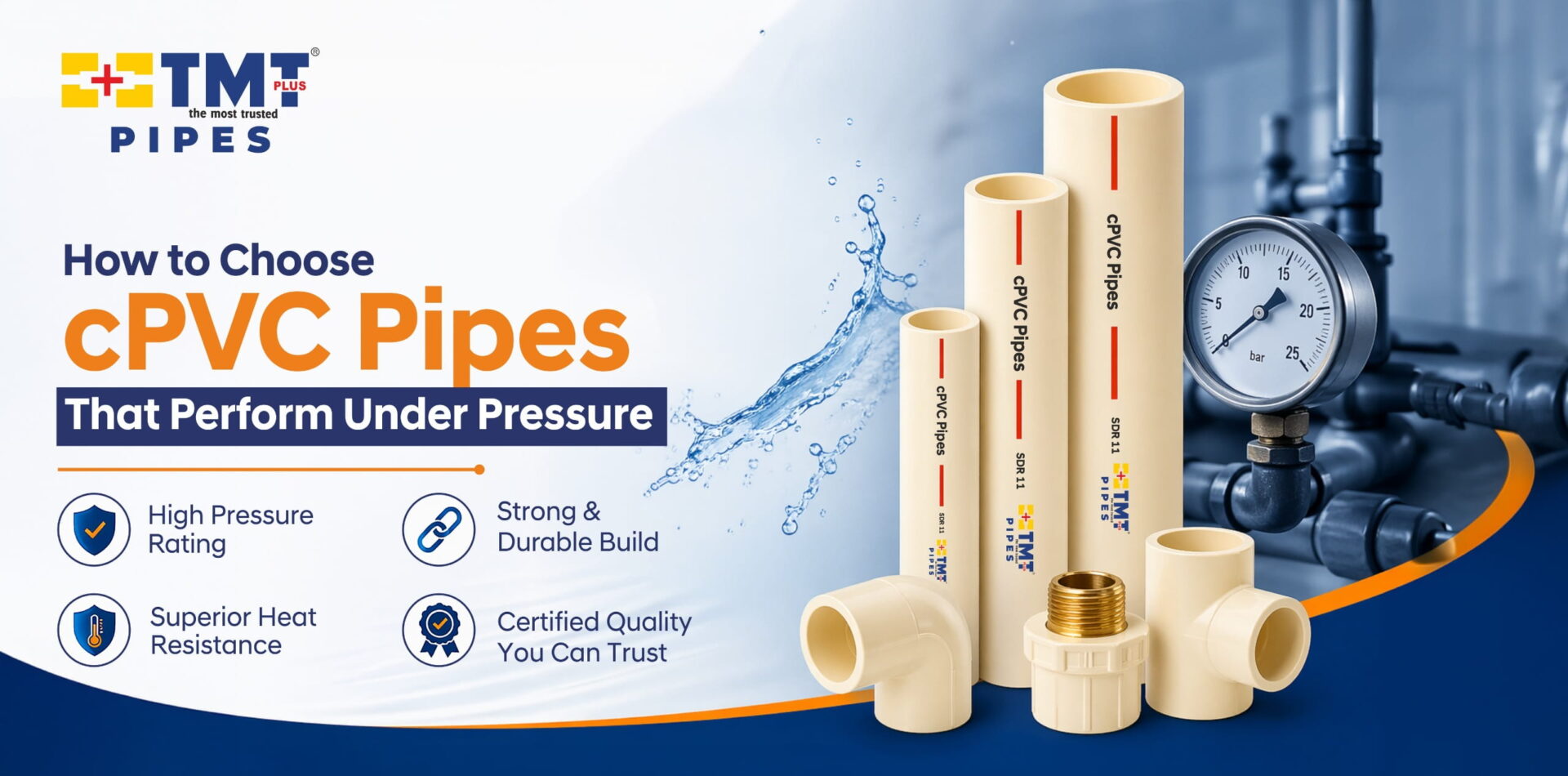
If you are a PVC pipe dealer, you would know that recurring issues such as pipe leakage, customer complaints, and early system failures can directly affect business reputation and profitability. Choosing the right CPVC pipes is not only about availability, it is also about ensuring consistent quality that performs well under demanding conditions, especially in hot water applications.
With rising expectations from homeowners, contractors, and industrial users, dealers must be able to identify reliable piping solutions that minimise callbacks and improve trust. This article will guide dealers through the key factors, evaluation methods, and best practices required to select high-quality products and support long-term business success.
Why High-Quality Pipes Matter for Hot Water Applications
- Heat Resistance Importance: CPVC products are designed to withstand high-temperature conditions without compromising their durability. Inferior quality pipes may bend or crack if subjected to a continuous hot water supply.
- Pressure Handling: The hot water supply system may require operation at different pressure levels. High-quality CPVC pipes perform well even if the pressure fluctuates.
- Durability and Long-Term Performance: Premium quality CPVC products are resistant to corrosion, scaling, and chemical reactions. This results in a long service life, eliminating the need for frequent replacements.
- Plumbing Safety: The safe and efficient operation of the piping system eliminates the risk of bursting.
Key Factors Dealers Must Check
For those managing a CPVC pipe dealership, it is important to know about the specifications in order to make proper recommendations.
- Pressure Rating (PN Class): The pressure rating, or PN class, represents the pressure level of the pipe. It is essential to consider the application requirements and compare them with the pipe class, because an improper selection may cause a system failure.
- Raw Material Quality: Good quality CPVC pipes are made of virgin materials, not recycled materials. This ensures better strength, improved durability, and significantly reduces the chances of brittleness, cracking, or early failure over time.
- Certifications and Standards: It is always recommended to check whether the pipe is certified by BIS, ASTM, and ISO, which ensures the quality of the product. Compliance with IS 15778 and ASTM D 2846 further ensures that the pipes are tested and suitable for hot water applications.
- Pipe Thickness and SDR: The Standard Dimension Ratio is defined as the ratio of the wall thickness of the pipe to its diameter. The lower the SDR of the pipe, the thicker and stronger the pipe will be. Thin pipes should be avoided as they may compromise the strength of the pipe.
- Brand Reliability and Supply Consistency: Choosing well-established companies will ensure quality and reliability. Dealers should look for companies that promise quality and reliability in terms of raw material supply, along with proper technical support and after-sales service.
How Dealers Can Evaluate CPVC Pipe Suppliers
Selecting the right supplier plays a major role in ensuring consistent product quality and long-term reliability. Dealers should take a structured approach before finalising partnerships.
- Check the source and grade of raw materials used in manufacturing
- Review testing procedures, lab reports, and quality assurance processes
- Evaluate warranty terms along with the availability of technical support
- Ensure the supplier can provide regular and consistent stock
Trusted brands like TMT Plus focus on high-grade raw materials and stringent quality checks, helping dealers deliver dependable solutions to their customers.
Common Mistakes Dealers Should Avoid
Avoiding common mistakes is essential to maintaining product quality and building customer trust over time. Even small oversights can lead to major issues in plumbing performance.
- Choosing products based only on price rather than long-term value
- Ignoring certifications and standard compliance requirements
- Using incompatible fittings that may lead to leakage or failure
- Maintaining inconsistent inventory, causing supply gaps
Being mindful of these factors helps dealers avoid complaints and ensures smoother project execution.
Checklist for Selecting High-Quality CPVC Products
Even auPVC Plumbing Pipe Distributor expanding into CPVC should follow a detailed checklist to ensure product reliability and performance in hot water systems.
- Verified temperature resistance of around 93°C for hot water use
- Certified products meeting BIS, ASTM, or ISO standards
- Uniform wall thickness for strength and durability
- Smooth inner surface for efficient and uninterrupted flow
- Reliable and trusted brand with proven market performance
- Full compatibility with fittings and accessories
Following this checklist helps dealers confidently recommend the right products to customers.
Best Practices for CPVC Dealers
Adopting best practices can help dealers strengthen their market presence and build long-term relationships with customers and contractors.
- Educate customers and plumbers on correct installation and usage
- Recommend appropriate pipe sizes based on application requirements
- Offer complete systems including pipes and compatible fittings
- Maintain consistent stock levels to avoid delays and shortages
These practices not only improve service quality but also position dealers as knowledgeable and dependable suppliers.
High-Quality CPVC Products Improve Dealer Business
Choosing high-quality CPVC products has a direct impact on business growth and customer satisfaction. It helps dealers create a strong reputation in a competitive market.
- Reduced complaints and fewer service-related issues
- Improved customer trust and stronger brand perception
- Increased repeat business and long-term client relationships
- Better profit margins due to fewer replacements and returns
Partnering with reliable CPVC pipe manufacturers such as TMT Plus further enhances consistency and supports sustainable business growth.
FAQs
1. What temperature can CPVC pipes handle?
These pipes can typically handle temperatures up to around 93°C under continuous operating conditions. This makes them highly suitable for residential hot water lines, commercial plumbing systems, and certain industrial uses. However, temperature tolerance also depends on factors such as pressure rating and installation quality.
2. How to identify high-quality CPVC pipes?
Check for BIS and ASTM certifications, uniform wall thickness, smooth internal surface, and use of virgin raw materials. Choosing trusted brands such as TMT Plus ensures consistent quality, durability, and reliable performance in plumbing systems.
3. Are all CPVC products suitable for hot water?
No, only certified pipes designed for high-temperature use should be selected. Trusted manufacturers like TMT Plus ensure their pipes meet the required standards for safe hot water usage.
4. Which certifications should dealers check?
Dealers should verify BIS IS 15778, ASTM D 2846, and relevant ISO certifications. These standards ensure pipes are tested for temperature resistance, pressure handling, and durability, as seen in quality-focused brands like TMT Plus.
5. How does pipe quality affect dealer reputation?
Pipe quality directly impacts customer satisfaction. Poor-quality pipes lead to failures and complaints, while high-quality products reduce issues, build trust, and drive repeat business.
Conclusion
Selecting high-quality pipes is essential for ensuring performance, safety, and customer satisfaction in hot water applications. By focusing on temperature resistance, pressure ratings, material quality, and certifications, dealers can make informed decisions and avoid costly issues.
TMT Plus offers CPVC pipes manufactured to stringent standards, available in multiple SDR classes and sizes, making them a reliable choice for modern plumbing requirements.
For dealers looking to strengthen their product portfolio, partnering with TMT Plus can help deliver consistent quality and support long-term business growth.