
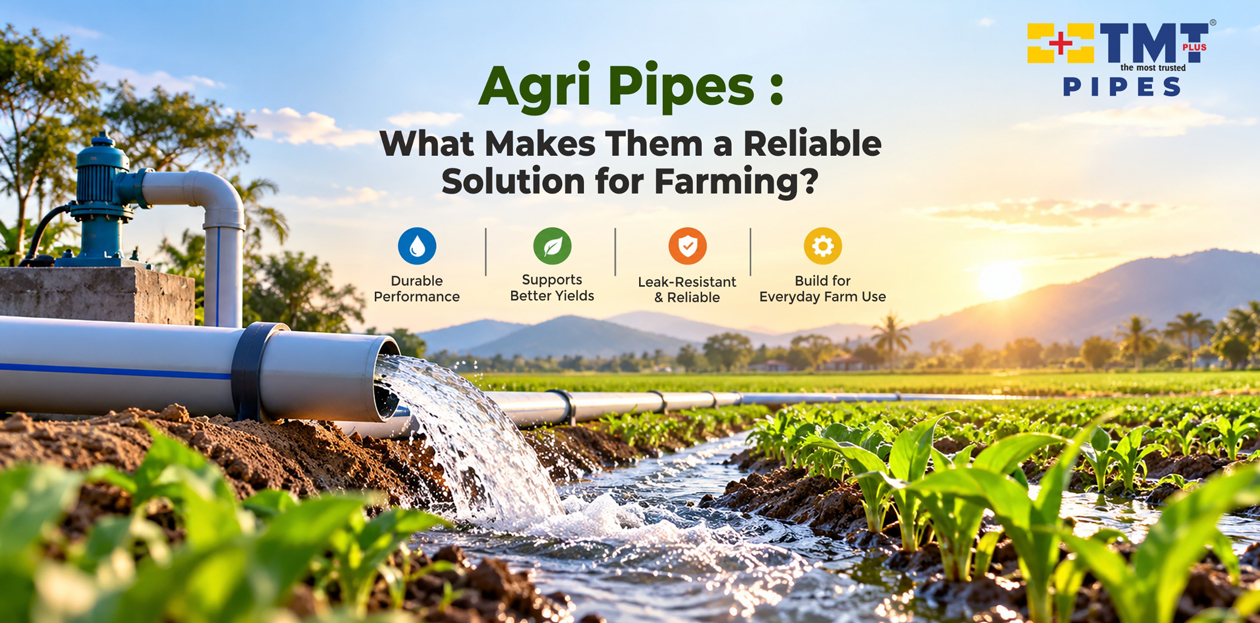
On a farm, the day’s work often depends on when water reaches the field. One plot may need watering before the afternoon heat, while another has to wait until the pump is free. When water flow slows down, or a joint starts leaking, even a familiar routine can become difficult to manage.
That is one reason agri pipes deserve more thought than they sometimes get. They may spend most of their working life out of sight, but they connect the water source to the crops that need it. Choosing a pipe involves more than finding the right length. Material, diameter, pressure rating and fittings all have a part to play. Here is how uPVC pipes measure up to the demands of everyday farm use.
1. Keeping Water Moving Across the Field
Water loses some pressure as it travels through a pipe. The farther it has to go, the more important the pipe’s diameter and internal surface become. A smooth bore reduces friction, but a narrow pipe can still restrict flow. This matters when a pump has to supply several outlets or reach a plot at the far end of the farm.
The agricultural uPVC range from TMT Plus has smooth inner walls to help water move through the line. Farmers still need to plan the route around their pump’s capacity and the water required at each outlet. Getting those basics right is more useful than simply choosing the largest pipe available.
- Match the diameter to the required flow
- Allow for longer runs and multiple outlets
- Keep unnecessary turns to a minimum
- Check joints for leaks after installation
2. Holding Up to Farm Conditions
A pipeline may run through damp soil, pass through fertilised fields or spend part of the day in direct sunlight. Rust and corrosion can shorten the useful life of some pipes, especially where moisture is hard to avoid.
TMT Plus makes its agricultural pipes from uPVC, which does not rust like metal. The range also features resistance to common soil chemicals, along with UV and weather stabilisation. That does not mean exposed pipes can be left without care. Storage, support and installation still affect how well they hold up.
- Consider soil and moisture conditions
- Check whether pipes will be sun-exposed
- Store lengths according to supplier guidance
- Protect sections likely to face impact
3. Choosing Pipes for Water Pressure
The pressure in a farm pipeline can change during the day. Starting a pump, closing a valve or pushing water uphill can all affect the load on a pipe. A diameter that looks suitable does not tell you how much pressure the pipe can safely handle.
TMT Plus lists pressure-rated agricultural pipes, including a 10.0 kg/cm² category. Its product information also refers to ISI certification and checks on wall thickness. Before buying, look at the marking on the actual pipe and confirm the applicable certification. Different sizes or variants may carry different specifications, and the fittings must suit the same working conditions.
- Read the pressure marking on the pipe
- Account for the pump and field elevation
- Check the rating of every fitting
- Ask an installer about pressure surges
4. Making Installation Easier
Laying pipes across a field can involve plenty of carrying, measuring and cutting. The job becomes harder where tractors cannot reach, or the route runs around existing crops. Lighter pipes are easier to shift into position.
The uPVC pipes supplied by TMT Plus are lighter than many metal alternatives, making them easier to handle on site. The brand also provides matching fittings for connecting the line. Even so, good installation takes care: prepare a suitable trench base, align the joints and test for leaks before covering everything with soil.
- Measure the route before cutting
- Use the recommended joining method
- Avoid forcing misaligned connections
- Test buried lines before backfilling
5. Getting the Connections Right
A farm pipeline rarely stays straight from beginning to end. It may turn along a boundary, split towards two fields or join a smaller distribution line. Those changes need fittings that match the pipe. A loose or unsuitable connection is an avoidable problem, especially once the line has been buried.
For these layouts, TMT Plus supplies couplers, sockets, elbows, tees, reducers and end caps. Each has a different job, from joining two lengths to closing an unused end. It is worth making a simple sketch of the pipeline before ordering. That way, you can check the fittings and sizes together rather than searching for missing parts midway through installation.
- Use couplers or sockets for joining sections
- Fit elbows where the line turns
- Add tees where water needs to branch
- Match reducers and end caps carefully
6. Serving Different Farming Needs
A vegetable plot, a greenhouse and a large open field will not all have the same water requirements. Some need frequent watering at shorter intervals, while others need water carried over longer distances.
TMT Plus identifies irrigation, greenhouse water distribution, bore-well applications and rural water supply among the uses of its agricultural range. The important distinction is that each job may call for a different product. A pipe used to distribute irrigation water should not automatically be treated as suitable for bore-well casing or drinking water supply.
- Plan main and branch lines separately
- Size pipes for each watering area
- Check the product’s stated application
- Use specialised pipes where required
A Real Farming Example from Odisha
In Raniguda village in Odisha’s Koraput district, farmer Bhima Saunta and his family used PVC pipes to bring water from hill streams to a vegetable plot. A report published by the Press Institute of India in April 2025 describes an investment of around ₹30,000 in the system.
According to the report, the arrangement used a 2-inch pipe to connect water sources and a 3-inch pipe to carry water approximately 400 metres towards the cultivation area. This illustrates how different sections of a farm pipeline may use different diameters. It does not establish that these sizes are appropriate for other farms; flow, elevation and pressure must be assessed for each installation.
Source: Press Institute of India, “Water drawn from hill streams irrigates land, an example of ingenuity in Koraput” (14 April 2025). https://pressinstitute.in/grassroots/water-drawn-from-hill-streams-irrigates-land-an-example-of-ingenuity-in-koraput/
7. Thinking Beyond the Purchase Price
A low price may look attractive when buying several lengths of pipe. But if a buried joint fails during the growing season, the repair involves more than the cost of a new fitting. Someone has to find the leak, dig out the section and get water running again. Those costs matter when comparing agri pipes manufacturers.
TMT Plus describes its ISI-certified agricultural pipes as designed for 10 years or more of service under suitable conditions. The brand also has an established dealer network across India, making it easier for buyers to enquire about replacement pipes and fittings. The actual lifespan will depend on how the line is installed, used and maintained.
- Check the certification of the chosen pipe
- Ask about local stock of matching fittings
- Keep a note of underground pipe routes
- Consider repair costs, not just purchase price
Keeping Your Farm’s Water Supply Reliable
Once an irrigation line is in place, most farmers would rather not think about it every day. They want water to reach the field when it is needed, without spending valuable hours tracking down leaks or replacing connections. A properly planned pipeline is one less thing to worry about during a busy season.
If you are comparing uPVC Agri Pipes & Fittings, start with the needs of your own farm. Check the water flow, pump capacity and route before deciding on the pipe size. Ask the supplier whether the fittings are readily available and what installation guidance applies. For a larger or more complicated layout, have an irrigation professional review the plan. A little care before the pipes go into the ground can save a fair amount of trouble later.
How to Choose the Right Agri Pipe Size for Your Farm
Choosing the right pipe size starts with your farm’s water requirements. A narrow pipe may restrict flow, particularly over long distances, while an unnecessarily large pipe can increase installation costs. Consider the following before buying:
Pump capacity: Check how much water the pump can deliver per hour.
Pipeline length: Longer routes may need wider pipes to limit friction losses.
Water requirements: Account for the number of fields and irrigation outlets.
Pressure rating: Ensure the pipes and fittings suit the operating pressure.
Frequently Asked Questions
1. What are uPVC agricultural pipes used for?Agricultural uPVC pipes carry water from pumps or storage tanks to fields. They’re also used to distribute water in greenhouse irrigation systems.
2. Can I use uPVC pipes underground?Yes, provided the pipe is suitable for underground use. Prepare the trench properly, remove sharp stones and follow the recommended bedding and backfilling instructions.
3. Should the main line and branch lines use the same pipe size?Not necessarily. The main line may need a larger diameter to supply multiple fields, while smaller branches may serve individual irrigation areas. Sizes should be selected according to flow requirements and system design.
4. What fittings can I get from TMT Plus?TMT Plus offers elbows, tees, couplers, sockets, reducers, bends and end caps. Just check that the fittings match your pipes before buying.
5. How long can TMT Plus agricultural pipes last?They’re designed for 10 years or more of service under suitable conditions. Actual lifespan depends on how the pipes are installed, used and maintained.